Digital media is only just reaching it’s maturity. The medium is so young and mainstream use of web technologies is still quite awkward. To believe that everything we build and design is going to be perfect the first time we try is unrealistic. It’s good to be critical and continue raising the bar of what is possible, but failure is still unavoidable. It’s much healthier to embrace the notion of failure as opportunities to learn. We learn more from loss than gain.
Lately, I’ve been thinking a lot about failure. Both in my personal life and professional sphere the idea of what constitutes failure has become an underlining theme. In meetings when new ideas have been proposed they've been continually rejected by those who fear failure.
"X company already tried that and it failed (a statement with no insight into the poor execution or variables)."
"We can't create a concise business case that we're guaranteed uptake so it's safer to keep doing what we're doing (even though no money is coming from what we're currently doing)."
"We thought of doing X years ago, but we didn't have X or Y or Z and now we've moved on. It's too late."
"X worked for Y, but that could never work for us because we're in a different category."
Being a risk taker means not worrying about failure because the risks are calculated and understood. If the exact goal is not succeeded an initiative is not necessarily a failure. Something is always learned and therefore there is always value. Digital media is founded on test and measure - not waiting for an answer to fall into your lap. In order to be in this business you must have a thick skin and be able to rebound quickly.
I read recently in a parenting book that you should never offer an option to a child that you are not prepared to allow them to fulfil. Being passive aggressive involves believing that other people can infer a meaning from subtle to non-literal cues. So often we believe that other people are psychics and able to pick up our non-actions as well as our actions. Or we try to control others and the world around us because we fear failure. The more we try to control digital media the less we grow. And being passive aggressive just wastes time. You might as well just stick your head and in the sand and wait for everyone to understand digital media as well as they understand traditional media. (I'll tap your shoulder is about 5-10 years.)
Some say that it takes 20 years to be able to make accurate inferences about individuals we know intimately. And if we apply that concept to ourselves or to our work it is reasonable to think that we’re destined to fail more than we succeed. That was the case for me, it took me about 20 years to really know myself and ten years later I’m still fine tuning my relationship with myself. Communication is a fine art, and so to is predicting user behaviour online. It takes time and a lot of trial and error.
My Dad used to call it “pulling a Jessica” - when I'd spontaneously try something and fail. I failed a lot as a kid and upon failing I gave up. Not to suggest my Dad was putting me down. He is a very wise man who helped me understand that what makes me different are my greatest assets. The trick is to apply what is different to benefit others and not become a reclusive introvert. If I think about my differences as hindrances I'd never try new things because I'd fear failure. I believe it's why I gravitated to digital media. Trying things and failing is a part of my personality. But as I've grown up I've realised that failing is no reason to give up - it's only the beginning.
“Life exists as a million deaths and a million rebirths.” - Toni Childs
Lately, I’ve been researching the concept of ‘brand experience’. First off, what are we talking about when we intellectualise the notion that we can experience a brand?
According to the clever peeps at Wikipedia:
A brand can take many forms, including a name, sign, symbol, color combination or slogan. The word brand has evolved to encompass identity - it affects the personality of a product, company or service.
Brand experience isn't just the design; it's also the usability of a website, the intuitive functionality of a phone app or the approachability of customer service. Our perception as consumers is formed by how we’re able to interact with a brand.
The web is information tapas; a tasting menu for ideas. The function of a brand website is to provide the building blocks for a user to form an opinion about the brand. It is our internalised perception of a brand that motivates us to endorse it. No matter how convincingly an ad tries to persuade us when it comes to online we are in search of convenient information wrapped within an engaging environment.
So how does a brand create an experience? The answer is to get inside the head of the brand's biggest fan. We are defined by our actions. If the majority of your site’s returning visitors are heading to the same page(s) or entering specific terms into the search box the experience needs to reflect this behaviour. The most important expert on consumer behaviour is your site’s regular visitors. Listen to them by studying their actions.
Another element is the experience is the look and feel. Women tend to view the web as a service; while men typically interpret the web as a tool. How does your website represent both the male and female perspectives?
If a website doesn't live up to our expectations than our preception of the brand can become tarnished.As an example, Nike.com is a flash website that is sleek and stylish, but it doesn’t feel like a shopping website. Whereas, Zappos.com is not half as pretty, but it feels like both a service and a tool to use. If the only way to buy Nike shoes was on Nike.com the experience would need to change. But Nike.com doesn't exist to sell; it exists for fans to experience the brand.
Utilitarian shoppers are interested in e-tailing because of four specific attributes: convenience and accessibility, selection, availability of information and lack of sociality (Wolfinbarger and Gilly, 2001).
Most consumers' online purchase decision is based on their motivation and goals.I don’t think Nike.com exists to sell shoes. I believe it exists to promote the brand. The experience on Nike.com is all about exploration and appreciation of design. This is why it has the ability for users to design their own custom shoes, learn about shoe performance, get training tips and fantasise about how their lives might be different with a pair of Nike’s on their feet.
Compared with conventional utilitarian shopping motivations, the merit of hedonic motivation is experiential and emotional. The reason why hedonic consumers do shopping is not for physical objective but for the shopping process instead. (Huang Jen-Hung and Yang Yi-Chun 2010)
The purpose of the website is just as important as observing user behaviour. Many websites intend to be all things to all people and it’s not possible and could damage the brand.
Nike.com is able to remain focused on its goal of creating a unique brand experience because their products are sold through 3rd party websites and their own bricks and mortar stores. Nike.com is all about the brand experience and not about buying shoes; however, there are a select few who are motivated by exclusivity and design. These consumers will take the risk of paying more because they are hardcore fans of the brand. But most consumers will look for the best price on eBay, Zappos or some other 3rd party seller. Nike doesn’t care because the brand website is serving its purpose of engaging with its fans.
"You can’t improve what you don’t understand.” – Avinash Kaushik
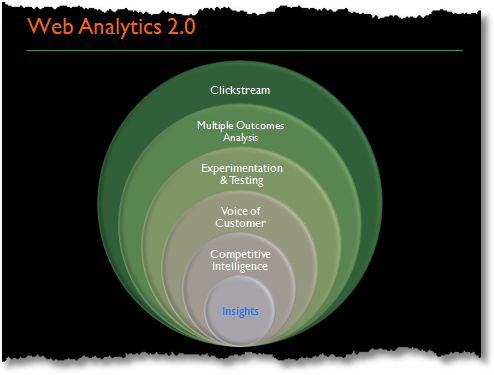
I've been reading a fantastic book this week that I highly recommend to anyone working within digital media analysis. Web Analytics 2.0, by Avinash Kaushik is a must-read for all online marketing professionals and business analysts.
Here's what I've taken away from my reading thus far:
Data is the anatomy of digital media. Within the structure of web platforms and online content is a wealth of information. It provides everything necessary to evaluate the sustainability of an online product. The challenge is not collecting data; but rather, in its evaluation and analysis. How and when decisions are made requires the right data at the right time. Timing is critical for proactive enhancements. By understanding the structure of digital media it is possible to improve the life of the product and the duration of its effectiveness.
The test and measure philosophy for success provides the awareness that no project is ever complete. It is crucial to acquire data that is actionable, and to discard data that is unhelpful or irrelevant. This principle seems simple, but assessing ‘good’ data from ‘bad’ data is unique to every web application, platform, and piece of content. Determining the KPIs (key performance indicators) requires trial and error.
Each individual within an organisation will have their own expectation for reporting based on their role and responsibilities. The role of the individual distributing these reports and evaluating them is determined by the company's corporate culture.
An administrator produces reports and distributes them to the individuals responsible for decision making. These managers evaluate the data and implement strategies based on the insights they extract. This causes delays and is not ideal for a start-up. A reporting system is better suited to a micro-management style of checks and balances, which slows down the decision making process.
The alternative is to employ an analyst who extracts insights based on their experience and industry knowledge. An analyst cuts down the time required for multiple individuals to reach a conclusion from the data. An analyst is suited to an agile development team that is trying to launch a new product. The difference is the speed in which decisions take place within the organisation. This report outlines the role of the analyst while detailing the necessary metrics to be collected and analysed.
Step 1: Customer Intent
This form of reporting is simple and standard with most analytics software. Essentially a few lines of code are added to each page; which is automatically generated by the analytics tool. This code will produce reports on general site-wide information, such as: page views and bounce rate. The core metrics listed above will be the basis for assessing the customer intent.
Step 2: Configure Settings
In order to asses “good” data from “bad” data the various conversion funnels will need to be stored within the analytics tool. These goals will allow us to determine how often a user performs specific actions that lead to positive outcomes; such as: completed registrations, subscribing to the newsletter, creating an ad, placing a bid, and even performing an internal search.
We need to capture the specific actions performed by each user in order to enhance and improve the sales funnel. Only through test and measurement of the online flows can processes be improved. If the majority of users are performing the same searches there may need to be a quick link provided upon point of entry to enhance the experience and serve relevant information directly.
Another important consideration is that not all actions will occur on the website. Thanks to open API's most users will be able to take action through external webpages and devices. Essentially, what the report needs to determine is how users are interacting with the platform (*think platform not website).
Step 3: Campaign Tracking
In order to accurately assess the ROI for online advertising and promotion it is critical that each and every Ad has a unique code associated with it. This includes emails, banners, referral links, and directory listings. The tag needs to include the location, source, and any other parameters surrounding the online marketing strategy for that particular promotion.
This requires time and a designated body assessing that the code is accurate and reports are verified. There are tools to help with the manual entry associated with campaign tracking, but it will require a person to manage and perform data entry.
It is very important to know where traffic is coming from and which referring websites are producing regular flows of traffic. The more relevant a promotion the higher the conversion rate which means a good return on investment. It’s important to determine which websites refer traffic based on internal search terms and top tags.
Step 4: Tracking Revenue & Intelligence
Additional JavaScript code will need to be embedded onto each page in order to extract data out of the page. The code will provide instructions for the script to know what data needs to be collected. Due to the fact that this data is personal and user generated it is important that all privacy measures have been taken into consideration. Legal evaluation of the data being collected is required; not only because of the user’s right to privacy, but because company data will be exported into an external tool and then processed into a report.
The value of this data is high and crucial for assessing gaps and accuracy of online forms, the payment gateway, and internal processes for user management. It is also required for measuring the payments being processed through your web platform.
Metrics to be collected include:
Daily Payments
Daily Fees Collected
Step 5: Event Tracking
Evaluating the effectiveness of rich media is paramount for any web 2.0 platform. Monitoring user interactions with content such as: videos, widgets, apps, audio, and any other user generated content. Developers will need to create and embed code into each piece of rich media content in order to track behaviour.
Reporting can include:
How often a video is played.
Viral distribution of content (sent via which aggregator)